
Every year, Bon Appétit’s Best New Restaurants list functions as a yearly status of exciting new venues and a forecast of where American dining is headed. The 2026 edition, covering restaurants that debuted between March 2025 and March 2026, reads as a direct rebuttal to a year when economic uncertainty pushed much of the industry toward safer menus and more cautious choices. Bon Appétit editor-in-chief Jamila Robinson describes this year’s restaurants as “risk-taking, trendsetting, and visionary.” She says the list serves as both a dining and travel guide, highlighting what’s new, what’s generating buzz, and which restaurants are doing something different.
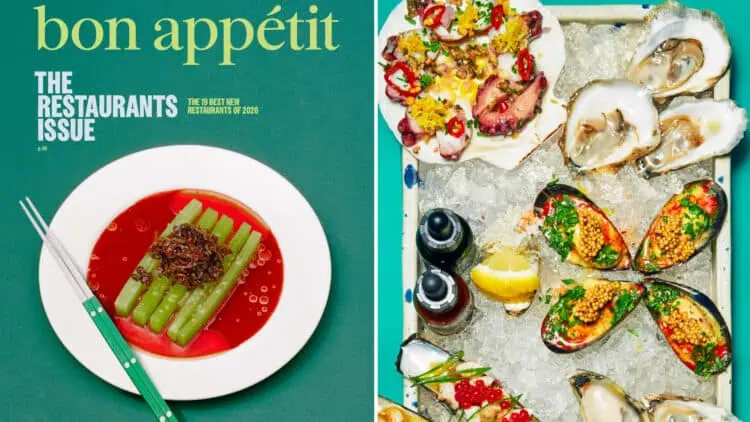
A team of scouts from Bon Appétit traveled to cities across the U.S., visiting hundreds of restaurants before coming together to select the final list. Robinson says the restaurants had to offer more than a recent opening. Each needed to bring something distinctive to the industry and represent the kinds of concepts Bon Appétit wants to see more of. For Robinson, great food was only part of the equation. She also considered the hospitality, design, and overall feeling of a restaurant. She wanted restaurants that delivered at every stage of the meal, from the welcome cocktail to dessert, comparing the ideal dining experience to “an album with no skips.” The result is a refreshingly varied list, from wine bars in New York and Washington, D.C., to a retro American roadside diner in Houston with Asian influences and a North Philadelphia spot that quickly has become a cultural institution.
Here are several restaurants that made the coveted list.
Lei
When a restaurant wins a spot on Bon Appétit’s annual ranking and the James Beard Award for Best New Restaurant in the same year, it instantly becomes one of the most sought-after reservations in town. Lei, Annie Shi’s 28-seat wine bar at the edge of Manhattan’s Chinatown, earned both distinctions in 2026. Shi, who also co-owns King and Jupiter restaurants in New York, built Lei around a cellar of nearly 1,000 bottles weighted toward natural producers and paired with regional Chinese cuisine from chef Patty Lee. The menu changes with the seasons and draws on the kind of domestic Chinese culinary tradition rarely seen in a fine-dining context. Dishes have included salted mustard greens with green chickpeas, fresh rice cakes, handmade cat’s ear noodles in a braised lamb ragù and steamed shrimp with ramps and Chinese celery. The room is small, personal, and deliberately unglamorous. The food is anything but.
Broken Spanish Comedor
Broken Spanish Comedor, the latest concept from acclaimed chef Ray Garcia, builds on his award-winning predecessor Broken Spanish, which closed during the pandemic, reinterpreting centuries of Mexican culinary tradition through a distinctly Los Angeles lens. The menu includes chicharrón shaped into a crisp-and-tender pork belly pinwheel, duck albondigas with chipotle and bacon, and lamb neck barbacoa served over fragrant consommé. The restaurant occupies an iconic A-frame building in Culver City, with a heated patio that has become one of L.A.’s most appealing outdoor dining spots.
Maison Bar à Vins
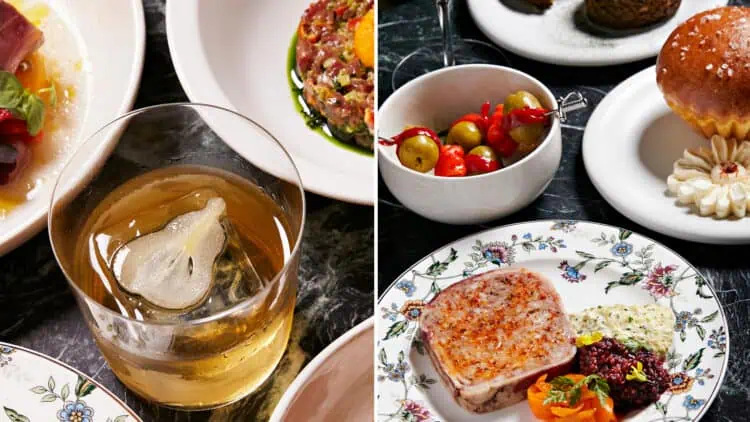
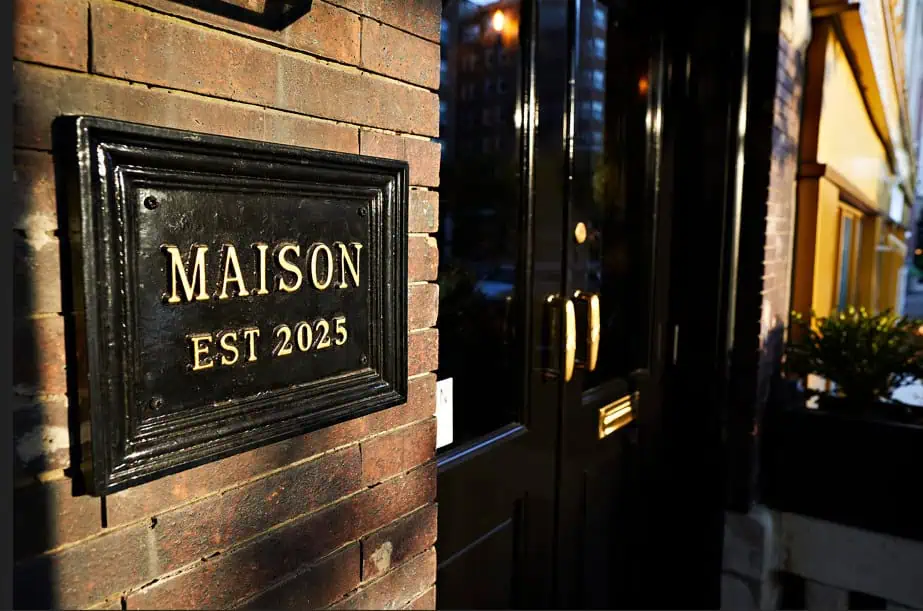
Washington, D.C.’s Maison Bar à Vins brings a European-style wine bar to a three-story historic brownstone in Adams Morgan. A 2026 James Beard Award finalist for “Best New Restaurant,” it’s the latest project from chef Matt Conroy and The Popal Group, whose Georgetown neo-bistro Lutèce earned a spot on The New York Times’ list of the “50 Most Exciting Restaurants in America” in 2022. With more than 1,000 bottles of organic, biodynamic, and natural wines in the cellar, wine is clearly at the heart of the experience. Even the cocktails incorporate wine-based ingredients. Conroy’s food starts with French technique but takes its cues from the farmers and producers around Washington. The menu has included seaweed choux buns, smoked eel croquettes, lamb tartare with bone marrow aioli, and house-made pastas. The setting fits the name. The century-old building features five working fireplaces and chevron floors, giving Maison the feel of an inviting home. After all, “maison” means home in French, and this one lives up to its name.
Honeysuckle
From pop-ups to residencies and a West Philadelphia grocery and supper club, Honeysuckle has existed in various forms over the years. The restaurant’s website describes it as a place where “artistry meets ancestry.” The Michelin Guide and James Beard-nominated restaurant, which opened in April 2025, serves a multi-course tasting menu drawing from local Black farmers, Black foodways, and Indigenous ingredients. Rather than standard fare, meals feature deep narrative pieces like Haitian spaghetti, “McDonald’s Money” with caviar remoulade, and Black Caesar salad as well as fresh spins on comfort foods like pork and beans with smoked pork belly, black-eyed peas and black currants, and fried catfish with turnip tartar sauce and chicories. Cybille St. Aude-Tate, who co-founded Honeysuckle with her husband, Omar Tate, sees food as a way to tell more nuanced stories about Black life. “We try hard to humanize the people behind the food,” she explains. For Omar, the restaurant is just one piece of a larger mission. “Yes, we’re a restaurant, but that’s only about ten percent of what we do. More deeply, we’re a cultural preservation project.”
Bayonet
At Bayonet, chef Rob McDaniel turns his attention to the Gulf Coast’s full range of ingredients, including the fish that most restaurants overlook entirely. Rudderfish, typically considered bycatch, receives the same careful treatment as yellowfin tuna. The raw bar—a jewel box of fresh oysters, smoked mussels, confit octopus, and razor clams—is the place to start. The cocktail program surprises guests with drinks like the tequila-forward Cry Baby, spiked with Nerds syrup and garnished with a Nerds Gummy Cluster.
Agnes and Sherman
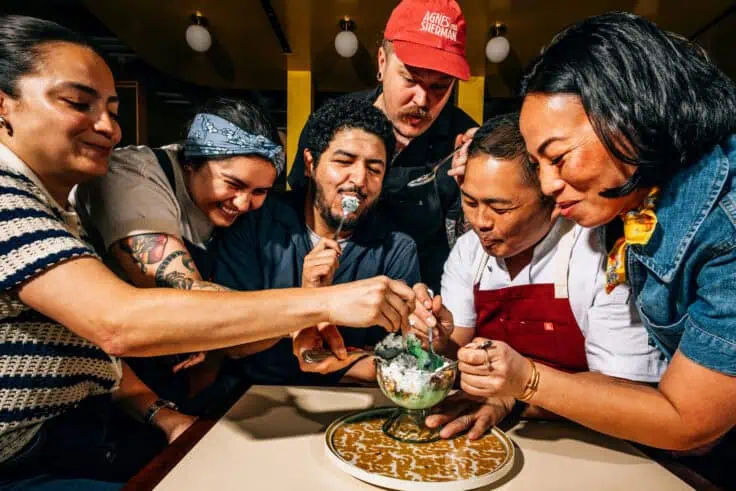
Named after executive chef and co-owner Nick Wong’s parents, Agnes and Sherman takes the bones of the American diner—red leather booths, countertop stools, and laminated menus—and builds on them through Wong’s and co-owner Lisa Lee’s third-culture upbringing. The cheeseburger fried rice, which has become the restaurant’s most talked-about dish, deglazes ground beef with tamari for a hit of umami, then finishes with shredded iceberg lettuce, American cheese, a drizzle of spiced secret sauce, and sesame seeds. The pandan sundae is another example of how Wong puts an Asian spin on a familiar American classic.
The 2026 Best New Restaurants list arrives as Bon Appétit continues to expand its focus, aiming to bring more personalized experiences to its audience. Just in time for the holidays, Bon Appétit will release a new app designed to bring the same spirit of discovery that defines its annual restaurant coverage into the home kitchen. The app will offer customized recipe recommendations based on dietary preferences and cooking interests, powerful search and filtering by ingredient, cuisine, and occasion, ratings and notes, instructional videos, and recipe pages that stay on screen while you cook. Robinson says, “The app will strengthen users’ connection with the brand, allowing them to save recipes, follow the AI Test Kitchen, and customize the experience around how they eat and their dietary needs.”
To learn more about the 2026 Best New Restaurants, visit Bon Appétit’s website and see the complete list below.
Lei · New York, NY
Broken Spanish Comedor · Los Angeles, CA
Casa Juani · Boulder, CO
Junior · Nashville, TN
Jules · San Francisco, CA
Kabawa · New York, NY
Creepies · Chicago, IL
Leo’s · Santa Fe, NM
The Wayland Mill · Seattle, WA
Saint Claire · New Orleans, LA
Honeysuckle · Philadelphia, PA
Maria Isabel · San Francisco, CA
Bayonet · Birmingham, AL
Anjin · Kansas City, MO
Little Mountain · Montecito, CA
Agnes and Sherman · Houston, TX
Sao · Philadelphia, PA
Le Calamar · Austin, TX
Maison Bar À Vins · Washington, DC