
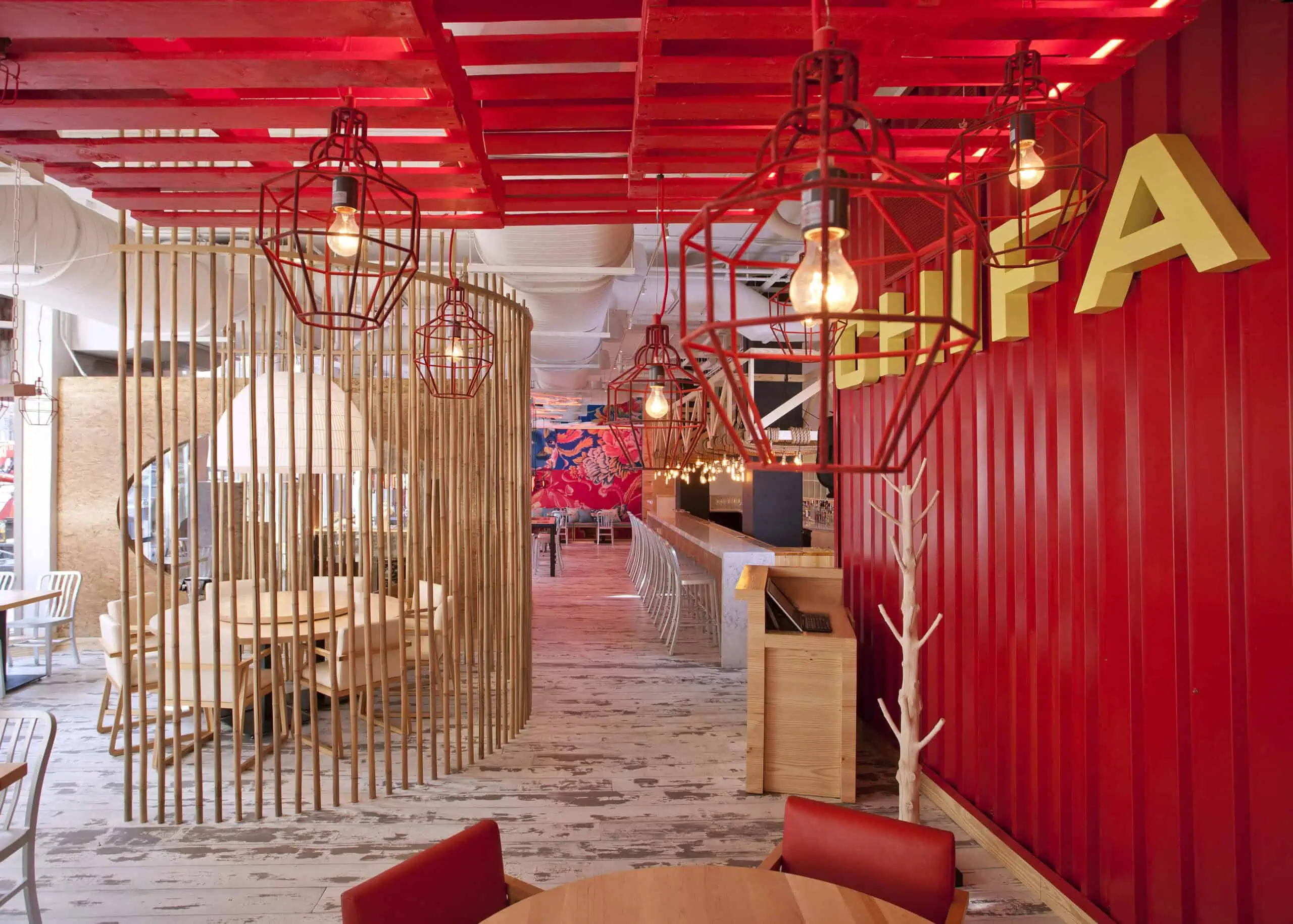
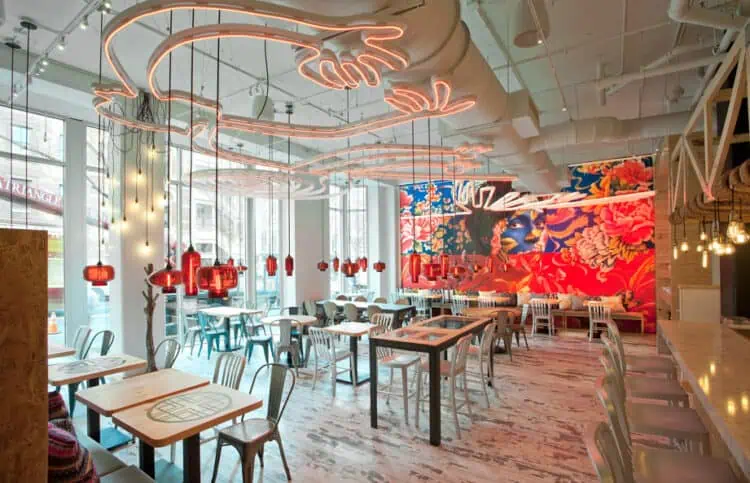
If you’ve ever walked down 7th Street in Washington, D.C.’s Penn Quarter, you’ve probably noticed the glow and steady buzz spilling out of China Chilcano. Last month, the restaurant marked its tenth anniversary, a milestone that goes far beyond serving meals. The 200-seat restaurant, named after Peru’s popular national drink, the Chilcano, has become a gathering place for the D.C. community, demonstrating that consistently great food, attentive service, and a distinct ambiance keep people coming back year after year.
At China Chilcano, Chef José Andrés and his team bring together Indigenous Criollo, Chinese Chifa, and Japanese Nikkei influences to create a menu that reflects Peru’s diverse culinary traditions. As Andrés puts it, “We showcase each cuisine separately and all of them together as a beautiful representation of the immigrant nation of Peru.” Dishes like Jiaozi de la Chacra, a dim sum–style plate with cilantro dumplings, squash, and ají rocoto, sit alongside a hamachi tiradito-inspired ceviche accented with ají amarillo, leche de tigre, and huacatay.
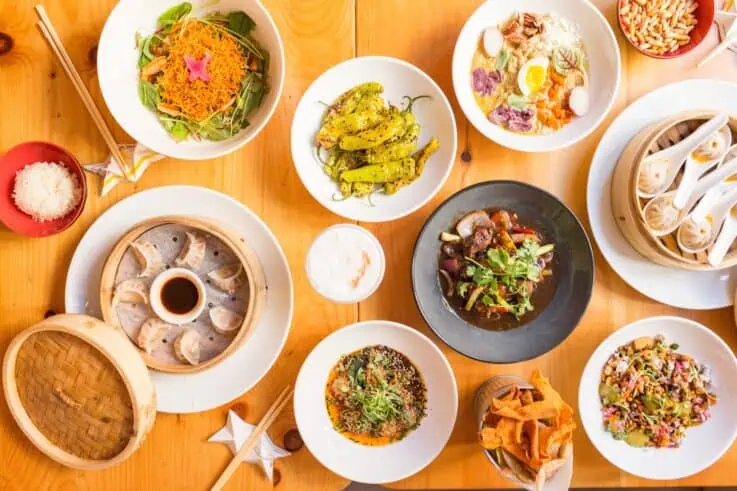
The experience is rounded out with tasting menus and a robust cocktail program featuring pisco flights, Japanese whiskies, and wines from around the globe. One of Andrés’ favorite menu items is the Saltado Maestro Wong, made with wild Pacific shrimp, fermented black beans, and wood ear mushrooms. “It’s a dish with deep meaning for me,” he says, “and for many people who have traveled to Lima to eat at Chez Wong,” the former restaurant of legendary chef Javier Wong.
What might surprise many diners is that China Chilcano almost began as a Chinese restaurant. When Andrés’ ThinkFoodGroup, now known as the José Andrés Group, first took over the 7th Street location, the concept was shaped by research trips to China and the team’s experience with its Las Vegas restaurant, China Poblano. Because the group had already opened Oyamel, a Mexican restaurant just down the street, a Chinese concept felt like the most natural fit for the space.
The restaurant concept shifted in 2013 when Andrés and his team visited Mistura, then Latin America’s largest food festival. There, they were drawn to Chifa, the fusion of Chinese and Peruvian cuisine that began in the nineteenth century as Chinese immigrants to Peru adapted their cooking to local ingredients. It was the kind of narrative that excited Andrés—merging cultures while celebrating their differences. After that trip, the idea of opening a Chifa-inspired restaurant in Washington, D.C., felt inevitable, and in 2014, Andrés and his research and development team returned to Peru to study Chifa in greater depth.
For Andrés, there was also a personal side to this pursuit. In 2013, Andrés became a U.S. citizen, and as he explored immigrant cuisines in Peru, he reflected on his own experience of building a life, a family, and a home in a new country. The stories of Chinese immigrants, Japanese families, and cultural blending in Peru resonated with him and shaped the restaurant’s identity.
Now, a decade later, China Chilcano is more than a restaurant. It’s a cultural institution in an industry where longevity is rare. Studies show that nearly 60 percent of new restaurants close within their first three years, and only a small fraction reach the 10-year mark. Renowned Peruvian chef Gastón Acurio has called China Chilcano an “embassy for Peru,” an apt description for a place where guests experience a taste of Peruvian culture through vibrant food and warm hospitality.
Looking ahead, the restaurant remains committed to deepening its understanding of Peruvian cuisine each year through partnerships, travel, research, and continued learning. Andrés says the team is always evolving and highlights recent collaborations with Capital One and Chef Gastón Acurio as key parts of that ongoing growth. “I can honestly say that we’ve really only scratched the surface,” he shares. “We will continue to celebrate the wonderful cuisines, products, and techniques of Peru. We’ve only just begun.”