
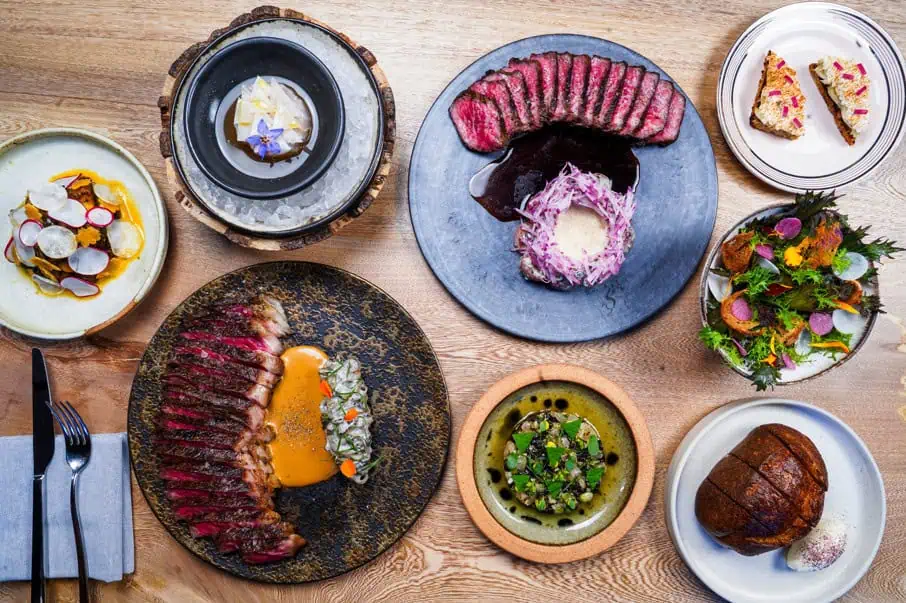
Texas’s dining scene has no shortage of culinary talent, yet few contemporary chefs have influenced the state as profoundly as Kevin Fink and Tavel Bristol-Joseph. The award-winning duo has launched 16 restaurants, including Michelin-starred Hestia, as well as recent Michelin-star earners Nicōsi Dessert Bar and Isidore.
Their partnership began years ago in Tucson, Arizona, at the Hacienda del Sol Guest Ranch Resort, a historic property that Fink’s father purchased and restored with his business partner. The hotel’s restaurant became Fink’s first training ground, where he washed dishes, bussed tables, and learned the inner workings of a professional kitchen. One of Fink’s fondest memories was standing beside his father, torch in hand, making crème brûlée for the first time. “It was so fancy back then to make this dish with my dad,” he recalls. Fink later honed his skills in Florence, Italy, Napa Valley, and Copenhagen, Denmark, before serving as director of operations at the acclaimed Italian trattoria Zona 78 in Tucson.
Bristol-Joseph’s culinary journey began in his native Guyana, where he spent Saturday afternoons baking cookies, cakes, and pies with his aunt for Sunday school. That weekly ritual sparked his lifelong passion for pastry. At 17, he moved to the U.S., enrolled at the New York Restaurant School, and worked his way through kitchens across the city. After two years with Fox Restaurant Concepts in Tucson, Bristol-Joseph joined Zona 78. He later led the pastry program at Hacienda del Sol, where he and Fink found themselves teaming up more frequently. “We didn’t plan to become partners,” Bristol-Joseph remarks. “We just realized we were building the same dream.”
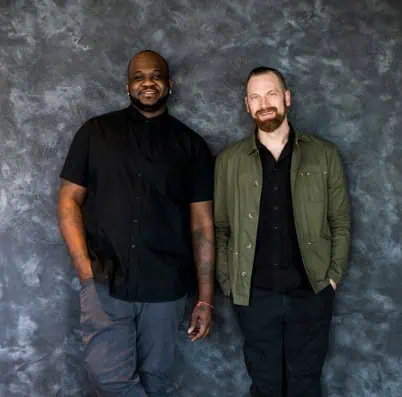
Fink and Bristol-Joseph have brought complementary strengths to their partnership. Fink approaches food with meticulous attention to structure and detail, while Bristol-Joseph leads with an intuitive approach to flavor. Together, they share a drive to experiment, innovate, and challenge norms in the culinary industry. “We had big ideas and goals about how we wanted to change the system, and still do,” Bristol-Joseph says.
That vision ultimately led them to Austin, Texas, where they’ve tapped into the state’s thriving network of local farmers and producers. There, they founded the Emmer & Rye Hospitality Group, beginning with Emmer & Rye, a restaurant that reimagined the region’s dining scene by focusing on whole grains, fermentation, and heritage techniques.
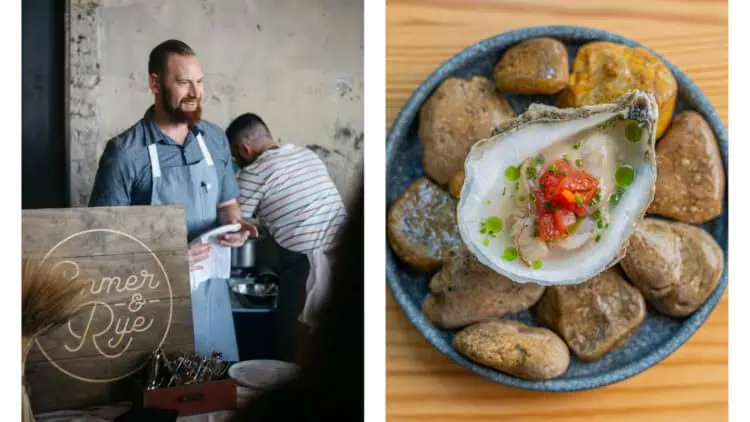
Each new concept under their umbrella maintains a distinct identity while remaining grounded in their disciplined approach. Fink says, “Consistency is at the heart of everything we do. It begins with guiding the team through our vision and equipping them to execute it with purpose.” Bristol-Joseph adds, “We also train our cooks to taste with intention. By tasting everything alongside us, they learn to recognize what the best version of a dish should be.”
Fink also points to seasonality as a defining factor in how guests experience their food. “Ingredients from South America don’t taste like those from Connecticut,” he notes. “That’s why you have to build trust, so guests come back for the creativity of your team, not because a Caesar salad tastes exactly the same every time.”
Building on their success in Austin, Fink and Bristol-Joseph expanded to San Antonio with Pullman Market, which opened in 2024. The vibrant food hall showcases a variety of concepts, including Nicōsi, a 20-seat dessert-focused chef’s counter led by Bristol-Joseph and Jorge Hernandez. Nicōsi flipped the traditional tasting menu on its head, making dessert the feature, not the finale. Its rotating eight-course menu explores umami, bitter, acidic, and sweet notes in an intimate, no-phone setting.
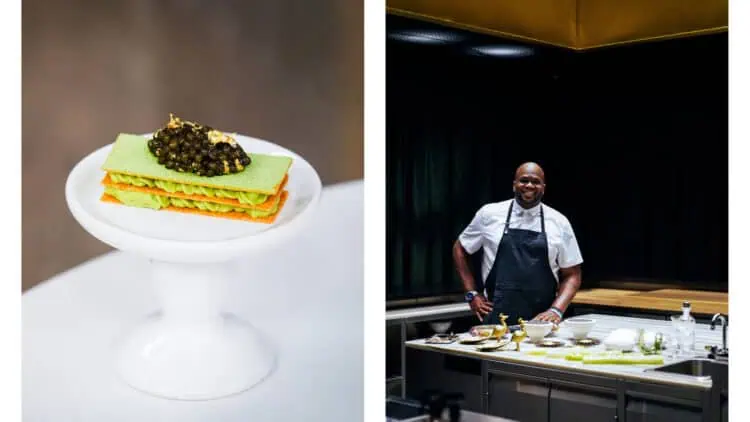
Highlights include sweet-and-savory contrasts like the Green Onion Mille-feuille with Fat Tailed Tomme cheese, green onion crème fraîche, and kaluga caviar, and BBQ Candy, which contains smoked wagyu beef brisket with spiced pineapple tare glaze, and smoke powder cotton candy.
Pullman Market is also home to Isidore, a fine dining restaurant led by Fink that explores seasonal cooking through a modern lens. The midcentury modern establishment serves farm-to-table dishes, such as Blackjack Point oysters with foraged juniper and a 21-day dry-aged black angus porterhouse.
Fink and Bristol-Joseph’s work extends far beyond what’s on the plate, tackling broader issues such as sustainability and food waste. Among their many initiatives is processing whole animals into beef and pork rather than conventional methods that combine hundreds of cows and pigs. They also find creative uses for animal byproducts, converting beef tallow into soap and rendered fat into lard for tortillas and fries. Even leek and onion tops are repurposed as house-made spices, reducing dependence on imported, shelf-stable ingredients. “We want to connect people to a better way to eat,” Fink explains. “Texas can be a year-round growing state if we build the right infrastructure.”
As their restaurant group continues to expand, Fink and Bristol-Joseph remain driven by their curiosity, creativity, and community. They strive to transform how people think about food and how local communities participate in the food system. During the past decade, through their award-winning concepts in Austin and San Antonio, they have proven that culinary excellence can thrive outside traditional hubs like New York, Los Angeles, or Chicago, and they take pride in placing Texas firmly on the global stage.
This article first appeared on Forbes.com.