

Travelers flock to Santorini for its panoramic vistas and luxury hotels carved into the cliffs. Then they try the wine. The island does not look like a place that should produce anything delicate. The ground is dry and rocky, wind moves through the vineyards almost nonstop, and rain is scarce during the summer. But that harsh environment is exactly what gives Santorini wine its character. The volcanic soil is packed with ash, lava, pumice, and minerals from eruptions centuries ago. These conditions force grapes to develop concentrated flavors and a signature saline quality that reflects the surrounding Aegean Sea.
Recognized with Protected Designation of Origin status in 1971, Santorini’s wine region is also known for kouloura, an ancient vine-training technique where the vines are woven into basket-like shapes and kept low to the ground to protect the grapes from the island’s harsh sun and winds.
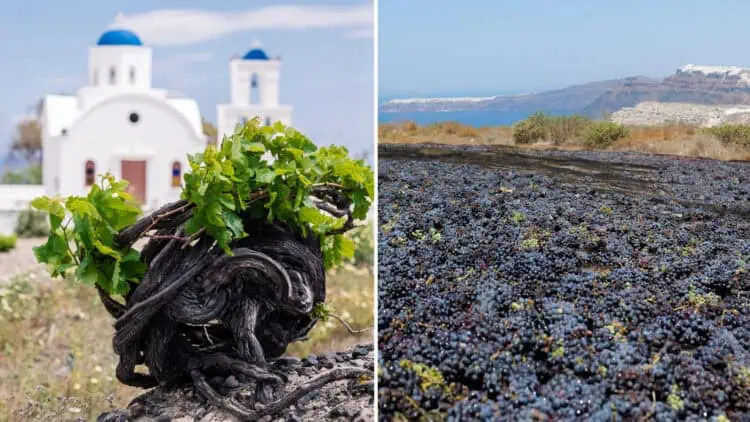
Assyrtiko is the most dominant grape in Santorini, accounting for more than 80 percent of the island’s vines. The variety produces crisp white wines known for their sharp acidity, bright citrus flavors, and distinctive mineral character that pairs well with seafood, grilled vegetables, and local cheeses. For many travelers, Santorini’s traditional sweet wine, vinsanto, becomes the surprise favorite. Produced from grapes left to dry under the sun before fermentation, the wine develops rich layers of dried fruit, honey, caramel, and spice, balanced by a bright acidity that keeps it elegant rather than overly heavy.
Perched high above the caldera, Santo Wines is one of the island’s essential stops for wine lovers. According to Katerina Filippou, director of marketing at Santo Wines, many of the island’s vines are between 50 and 80 years old, while some pre-phylloxera vines are more than a century old. She says, “Combined with low yields, volcanic soil, and labor-intensive vineyard practices, these conditions produce grapes with remarkable concentration and character.”

Tastings at Santo Wines include multiple expressions of Assyrtiko alongside blends and dessert wines. The Santorini Assyrtiko remains the winery’s best-selling label, which Filippou describes as a true reflection of the island’s identity and vineyard heritage. Guests can also stay for dinner, as the winery offers a full-service dining menu, featuring dishes like tuna and beef tartare with kimchi and black sesame, grilled sardines, fava octopus, and wagyu souvlaki. Santo Wines is preparing to expand its wine tourism offerings with a second destination for private visits and exclusive tastings of carefully selected older vintages.
For a closer look at Santorini’s traditional winemaking culture, visitors can head to the medieval village of Megalochori to visit the Gavalas winery, where the family has been producing wine for generations. This property uses historic stone cave cellars known as canavas, where local winemakers have long crafted and stored wines away from Santorini’s harsh winds and intense sun. It’s also the only winery in Santorini that still vinifies two indigenous rare varieties, katsano and voudomato.
One of the most memorable ways to experience Santorini’s wines is the Secret Wine Cave tasting at Mystique, a Luxury Collection Hotel. Hidden beneath the property, the cave remains naturally cool, with rough stone walls and soft lighting that create a romantic atmosphere. The wines themselves taste sharper and more vivid in that setting.
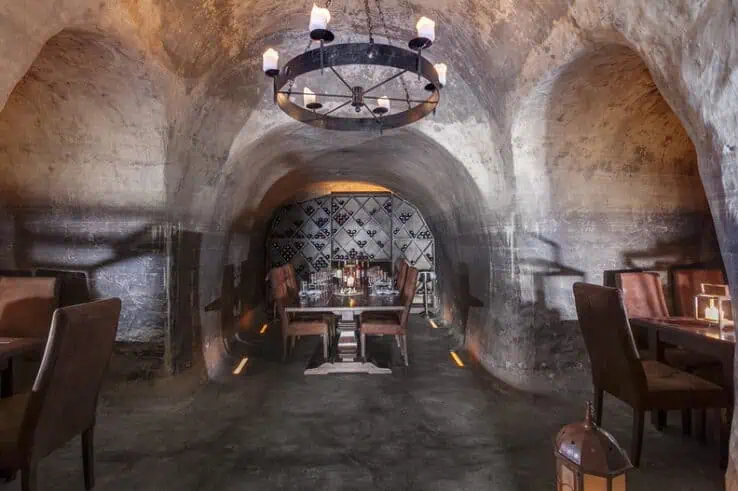
At Vedema, a 400-year-old winery has been transformed into a luxury hotel that continues to honor its winemaking roots. At the hotel’s Canava Wine Bar, tastings of Assyrtiko and barrel-aged Nykteri are paired with charcuterie and cheese inside a cool, atmospheric cellar. For those interested in exploring the island’s deeper wine history, the Koutsogiannopoulos Wine Museum and Winery provides an immersive look at Santorini’s winemaking traditions, which trace back to the Minoans and the Bronze Age settlement at Akrotiri. The winery also offers guided tastings and curated packages served with light bites.
One of Santorini’s newest luxury properties, Santo Mine at Santo Collection invites guests to explore Greek wine culture through its Grapes of Greece experience. Hosted in the property’s wine cellar, which features nearly 200 wine labels from Santorini, across Greece, and from renowned wine regions around the world, the semi-private wine tasting includes five local wines and artisanal Greek cheeses.
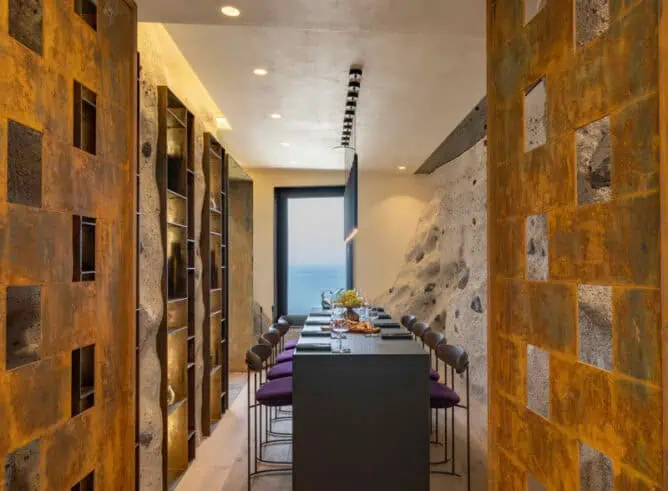
The property’s wine-focused atmosphere extends to Rhoē Wine Bar, the resort’s poolside gathering space, where local wines and botanical cocktails made with home-grown ingredients are served throughout the day. Guests seeking a more tailored experience can arrange private tastings with the resort’s in-house sommelier directly in their villa and also tour the hotel’s small Assyrtiko vineyard to learn about the island’s viticulture. Sakis Triantafillou, food and beverage manager at Santo Collection, shares, “We hope that as the vineyard matures, we will eventually produce our own estate wine.”
Santorini accounts for only a tiny share of global wine production, half of which is consumed in Greece, yet what it does produce is highly impactful. The production is small in scale, but the relationship between the island’s landscape and its wines is deeply expressive. Volcanic soil, arid air, and constant winds all come through in the glass, creating a style that could only exist here.